Sikes Vacations Real Estate -- Find the deal. Know the why. Investor Insights.

Find the deal. Know the why.

Field notes for clear-eyed property investors -- where cash flow still works, what to buy, and how sophisticated buyers think about tougher markets like Seattle.

Playbook / 01

Four ways into the market.

There is no universal “best” strategy. The right one fits your capital, time, risk tolerance, and local edge.

01

Cash-flow rentals

Buy where in-place rent covers debt service, repairs, vacancy, and management -- with margin left over every month.

Why it works: Cash flow is the only return that doesn't depend on a future buyer, a future rate environment, or a future appraisal. It pays you whether or not the market cooperates, which is why it's the base strategy most portfolios are built on before layering in anything else.

Key risk: The markets that cash flow best today are rarely the markets with the fastest rent or price growth. Chasing yield alone can mean buying into slow- or no-growth metros -- underwrite the population and job trend, not just this month's numbers.

02

Value-add

Create equity on purpose: a light renovation, a reconfigured floor plan, better leasing and operations, or fixing a unit mix the current owner never bothered to.

Why it works: You're not waiting on the market to hand you appreciation -- you're manufacturing it, which means the return shows up faster and is less exposed to broader market timing than a straight buy-and-hold.

Key risk: Renovation budgets and timelines both run over more often than not. Underwrite a contingency into the budget and the hold period, and get firm contractor bids before you're under contract, not after.

03

House hacking

Live in one part of the property and rent the rest -- a spare bedroom, an ADU, or the other side of a duplex -- so tenant income offsets some or all of your own housing cost.

Why it works: It's the lowest-capital way into real estate investing: owner-occupant financing (as little as 3-5% down on conventional loans, 3.5% FHA) is far cheaper than investment-property financing, and you learn to be a landlord with the smallest possible portfolio.

Key risk: It only works if you're genuinely willing to share a property with tenants day to day. Screen carefully -- a bad tenant relationship is a much bigger problem when they live twenty feet from you.

04

Appreciation plays

Accept thinner (or negative) income today in exchange for constrained housing supply, strong job growth, and durable long-term demand -- Seattle is the market on this map that fits this strategy.

Why it works: In supply-constrained metros, the equity growth and the tax leverage available to an active operator can outpace what a higher-cap-rate but slower-growth market will ever produce -- see the Seattle section below for the full mechanics.

Key risk: This strategy is the most exposed to holding-period risk: financing costs, vacancy, and negative monthly cash flow all have to be carried out of pocket until the thesis plays out. It's not a fit for a thin cash cushion or a short time horizon.

Market map / 02

Where the numbers still work.

A directional screen, not a promise. Compare typical entry price and gross yield, then underwrite the specific block and asset.

Yield 7%+ Yield 5-7% Yield below 5%
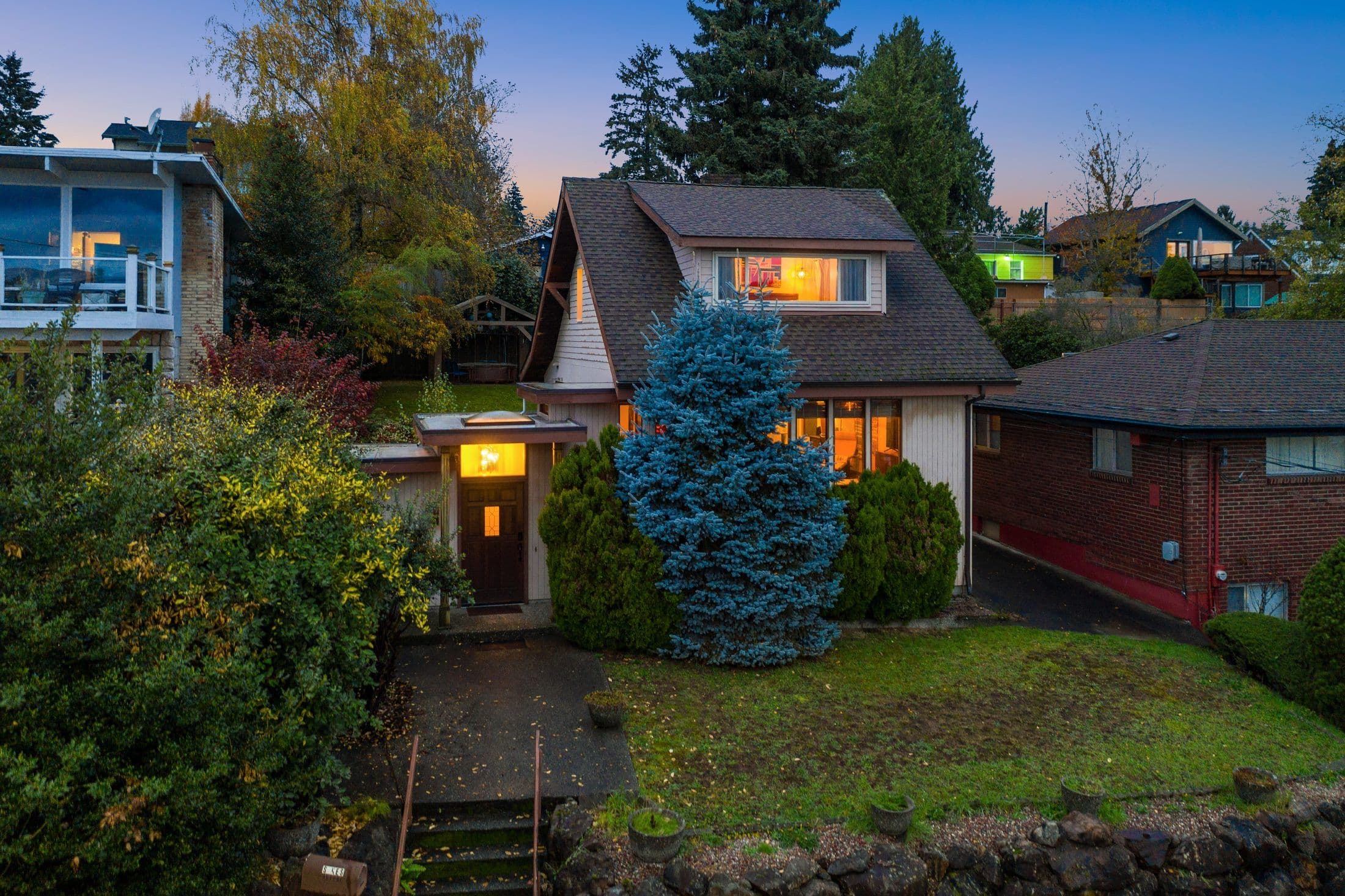
A close-in Puget Sound craftsman home at dusk

“Lakeview Historic Getaway” -- one of Sikes Vacations’ own properties, a Puget Sound rental near Seattle.

Tough market / 03

Seattle doesn’t cash flow. So why do investors stay?

Because cash flow is only one return. In a supply-constrained city with some of the highest concentration of high-income W-2 earners in the country, experienced buyers are underwriting three other returns: forced appreciation, tax leverage against their own income, and gross rent per square foot that a single-tenant lease badly undersells.

01 / Buy the zoning

Seattle’s post-HB 1110 zoning now allows four to six units on most residential lots near transit. ADU and DADU potential, lot-split eligibility, and small-lot multifamily conversion can matter more to the real return than the current cap rate on the existing structure -- you’re underwriting what the parcel is legally allowed to become, not just what’s sitting on it today.

02 / Solve a problem

Cosmetic distress, deferred maintenance, and poor management create a margin the market won’t hand you for free. A property that’s hard to finance as-is, or that a burned-out landlord has under-managed and under-rented for years, is where the forced-equity math actually happens.

03 / Hold longer

Expensive markets punish short timelines: transaction costs, financing costs, and thin-to-negative early cash flow all need years of durable financing and rent growth to work in your favor. This is a five-to-ten-year thesis, not a two-year flip.

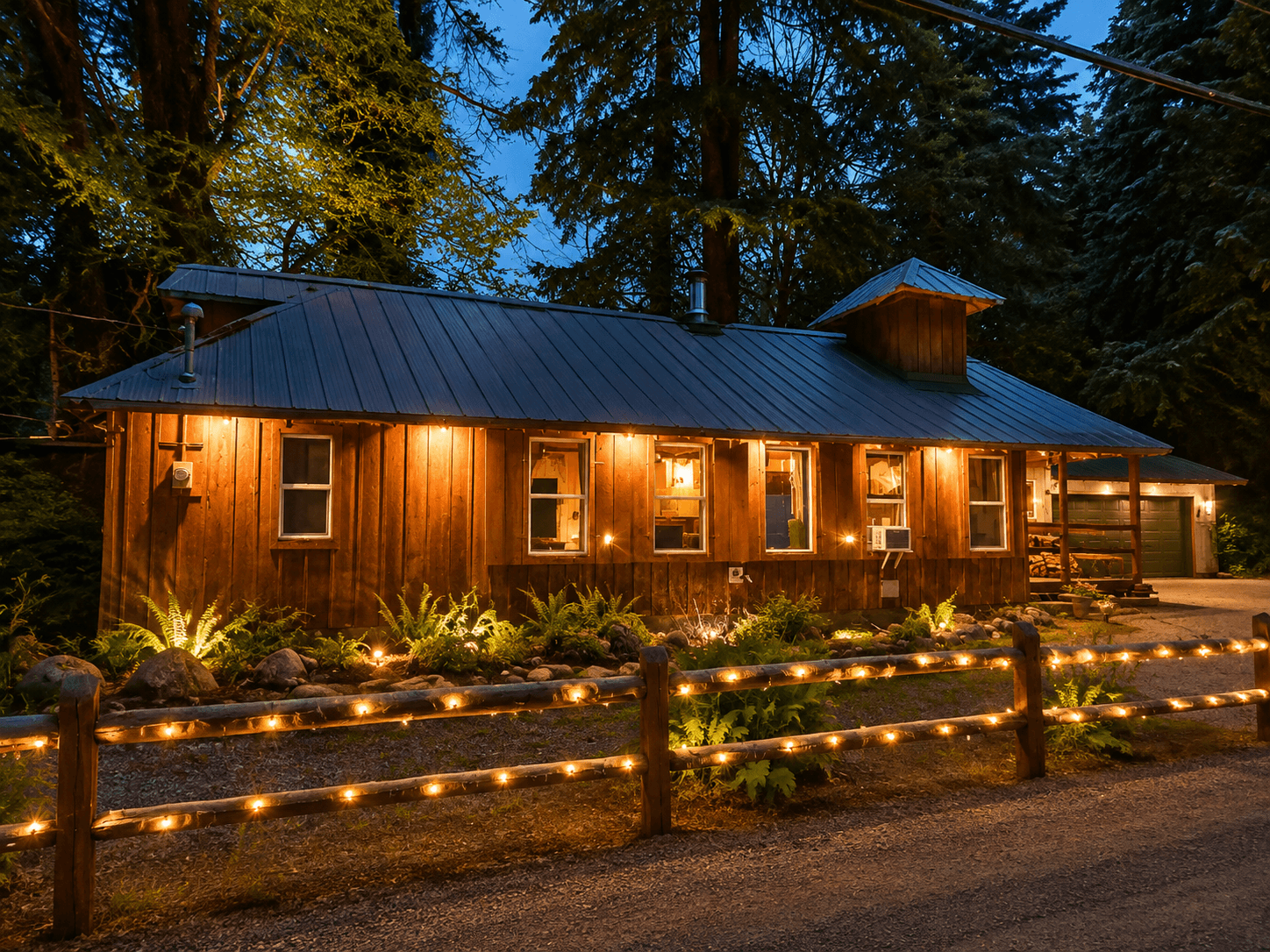
A short-term rental cabin lit up at twilight

“Cozy Cabin w/ Hot Tub & Sauna” -- one of Sikes Vacations’ own properties, the kind of high-demand short-term rental this strategy is built around.

04 / The W-2 tax play

How high-income earners use a Seattle rental to lower their own tax bill

Seattle has an unusually large concentration of W-2 earners at the top federal tax brackets -- Amazon, Microsoft, Google, and Meta all have major engineering and corporate campuses here. Washington has no state income tax, which means for most of these households the entire tax problem is federal, and a large share of their income can’t be sheltered through the usual small-business deductions available to a self-employed person. This is exactly the profile the short-term rental tax strategy was built for.

Under the IRS passive-activity-loss rules, rental losses normally can’t offset W-2 wages unless you qualify as a real estate professional -- a 750-hour-a-year test that’s essentially unreachable for someone working full-time in tech. But a short-term rental with an average guest stay of seven days or less isn’t classified as a “rental activity” under the passive-loss rules in the first place -- it’s treated as a trade or business (Treasury Regulation 1.469-1T(e)(3)(ii)). That reclassification only helps if you materially participate in running it: generally 100+ hours a year, and more hours than anyone else involved (your cleaner, co-host, or property manager combined). Clear that bar and the activity’s losses become non-passive -- deductible directly against ordinary income, including a W-2 salary.

The loss itself is manufactured mostly through depreciation, not through the property actually losing money. A cost segregation study reclassifies interior finishes, appliances, and land improvements out of the standard 27.5-year depreciation schedule and into 5-, 7-, and 15-year categories. Under the 2025 One Big Beautiful Bill Act, 100% bonus depreciation was permanently restored for qualifying property acquired after January 19, 2025 -- meaning all of that reclassified value can be deducted in year one instead of spread across decades. On a $700K-$900K Seattle-area short-term rental, that can mean a six-figure paper loss in the first year alone, even on a property that is cash-flow neutral or positive.

This is real, well-established tax law -- not a gray-area workaround -- but it has real requirements: genuine, documented material participation, an average stay that actually holds at seven days or less across the year, and depreciation recapture owed when the property is eventually sold. Local short-term-rental licensing and zoning rules apply on top of the tax analysis. This is general education, not individualized tax advice -- work with a CPA experienced in short-term rental cost segregation before you buy or file.

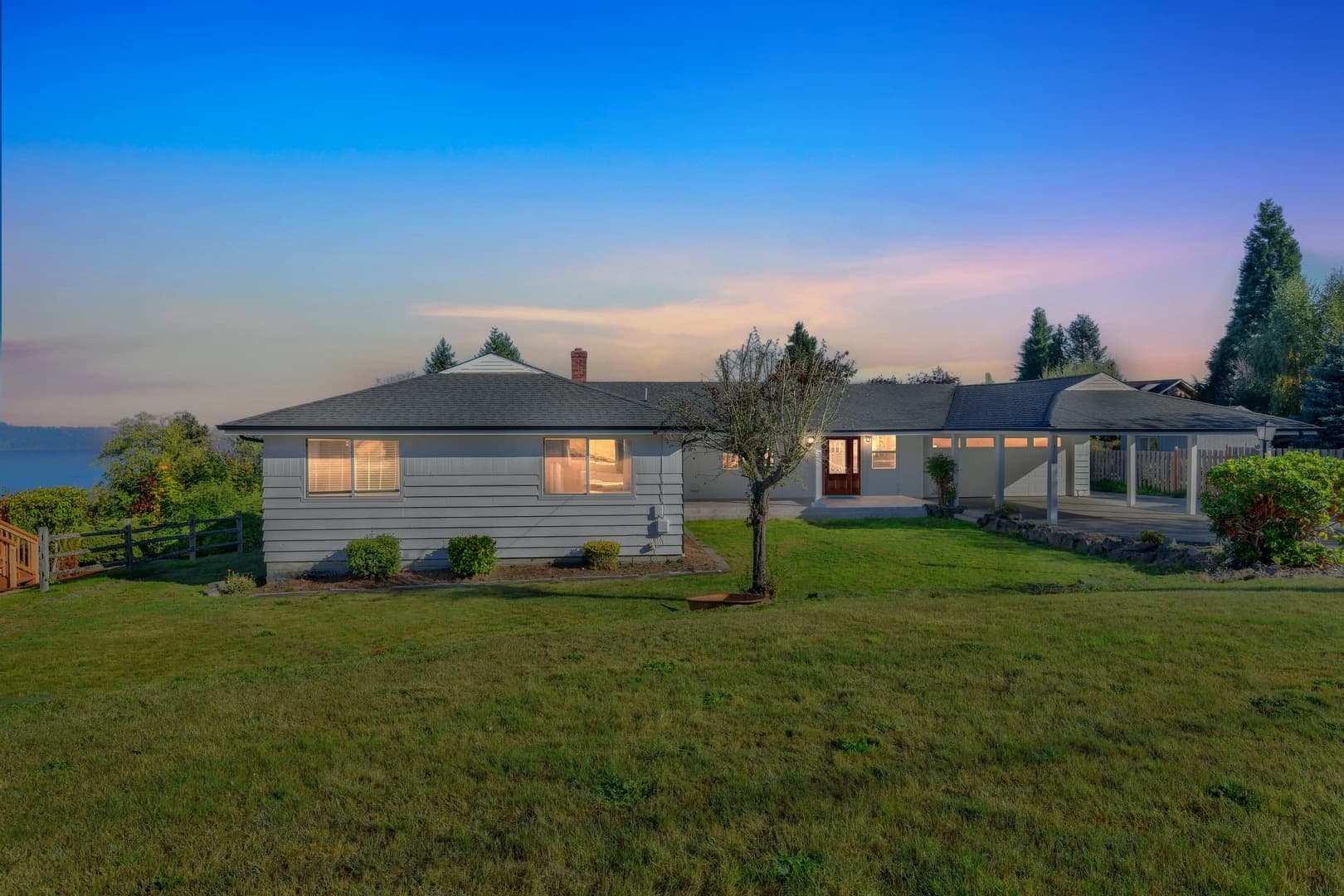
A large 5-bedroom home in Federal Way, WA at dusk

“Ocean View Retreat” -- one of Sikes Vacations’ own properties, a 5-bedroom rental home in Federal Way, WA.

05 / Renting by the room in the fringe

Buying big in the exurbs, then renting it out room by room

Seattle’s cash-flow problem is really a home-price problem, not a rent problem -- rent per bedroom actually holds up well across the metro. That gap is why a growing number of investors are buying large, new-construction homes further out, in fast-growing fringe suburbs like Auburn, Bonney Lake, Puyallup, Graham, Spanaway, Enumclaw, and Maple Valley, where a five-, six-, or seven-bedroom new build is still attainable at a price a single tenant’s rent won’t service -- but the same house, leased bedroom by bedroom, will.

The strategy is straightforward: instead of one lease to one household, you sign individual leases (or license agreements) with each occupant for their own bedroom, with shared access to the kitchen, living areas, and yard. New construction fits this well -- more bedrooms per square foot than an older home, multiple full bathrooms, and floor plans that already separate bedrooms into distinct wings.

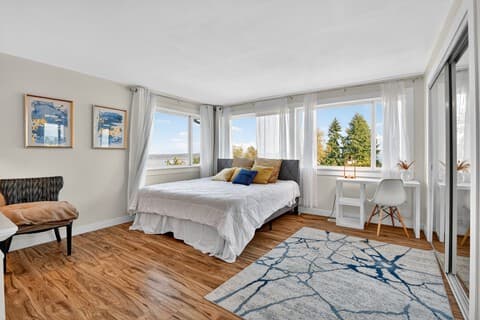
One of the bedrooms in a large suburban rental home

Illustrative example -- 6-bedroom new-construction home, fringe Puget Sound suburb

Whole-house lease

$4,000/mo

One tenant or household, one lease, minimal turnover

6 bedrooms, rented individually

$6,000/mo

~$1,000/room average -- private-bath rooms rent higher, shared-bath rooms lower

+$2,000/mo -- roughly 50% more gross revenue from the same asset and the same debt service.

Illustrative math for a hypothetical property -- not a projection for any specific address or listing.

That premium exists because renters priced out of Seattle proper -- traveling healthcare workers, tech contractors, young professionals -- will pay more per square foot for a private, furnished bedroom near a commute corridor than the per-square-foot rate of a full house lease. It’s the same logic as a short-term rental’s per-night premium, applied to a monthly room instead.

It’s also meaningfully more work than a single-tenant lease: six micro-tenancies instead of one means six times the turnover, screening, and cleaning. Financing is still underwritten as a standard single-family home -- a lender won’t credit the room-by-room income at purchase, so the extra revenue is operating upside, not equity you can borrow against day one. Most importantly, confirm local rules before underwriting this on a specific address: many Washington cities cap the number of unrelated occupants per dwelling or classify a home renting to several unrelated tenants as a boarding house requiring its own license, and a landlord/dwelling insurance policy is typically required once it’s a multi-tenant rental rather than a standard homeowner’s policy.

06 / Financing the deal

How investors actually fund the next purchase

A conventional investment-property loan from Fannie Mae or Freddie Mac requires more down than an owner-occupied purchase -- typically 15% minimum on a single-unit rental (20%+ to avoid extra pricing hits) and 25% minimum on a 2-4 unit building, with a rate that runs roughly half a point to a full point above owner-occupied pricing. FHA, VA, and USDA loans aren’t an option here -- all three require owner-occupancy, which is exactly why house hacking (strategy 03 above) works: it’s the one path into a multi-unit property that still qualifies for owner-occupant terms.

Once income documentation is the obstacle rather than the down payment, a DSCR loan (debt-service-coverage-ratio) qualifies the property instead of the borrower -- the underwriting question is whether in-place or market rent covers the mortgage payment, not what shows up on a W-2 or tax return. These are non-QM products offered by specialty and non-bank lenders rather than Fannie/Freddie, typically running 20-25% down with a minimum DSCR of roughly 1.0-1.25 for the best pricing. Investors scaling past a handful of doors often move to a portfolio (blanket) loan instead -- one loan against multiple properties, held by the originating lender and underwritten on the properties’ combined cash flow rather than refiled individually with Fannie/Freddie each time.

The down payment for the next deal frequently comes out of the last one: a HELOC or cash-out refinance against existing equity is the standard way active investors keep buying without waiting to save a new down payment from scratch. Locally, BECU is a confirmed example of a Washington credit union that will write a HELOC against a rental or investment property, not just a primary residence -- worth a call to a mortgage advisor there or at another local lender to compare terms against a non-bank DSCR shop.

Rates move weekly -- Freddie Mac’s Primary Mortgage Market Survey is the reference point for where owner-occupied 30-year fixed rates actually sit, and investment-property pricing runs above that baseline by the premium described above. Get a current quote before underwriting any specific deal; nothing here is a rate to lock in against. New to terms like DSCR, LLPA, or cap rate? See the real estate glossary.

07 / The ADU angle

What an accessory dwelling unit actually adds to a deal

Washington’s 2023 statewide ADU law (HB 1337) set a floor every city and urban unincorporated area now has to meet: at least two ADUs allowed per lot on top of the primary house, no owner-occupancy requirement, and no off-street parking mandate near transit. Seattle actually got there first -- it dropped its owner-occupancy requirement back in 2019 -- and current SDCI guidance confirms the city now allows up to two ADUs per lot (attached, detached, or one of each) with no parking required. In unincorporated King County, the March 2026 county guidance allows the same two-per-lot standard inside the urban growth area; outside it, rural parcels are generally limited to one ADU, typically attached, unless the lot meets a minimum size threshold for a detached unit.

That matters for underwriting because a lot’s ADU potential is often worth more than the cap rate on the structure sitting on it today -- the same point made in “Buy the zoning” above. A detached ADU (DADU) in the Seattle area runs a wide range depending on size and finish -- builder estimates span roughly $100K for a modest garage conversion up to $400K-$600K for a larger new-build two-story unit -- so it’s a real capital outlay, not a cheap add-on, and needs its own underwriting rather than an assumption that it’s free equity. Expect a real permitting timeline too: plan review alone commonly runs 30-45 days, and a custom design can take four to eight months start to finish; Seattle’s pre-approved ADUniverse plan sets can shorten that meaningfully for a standard layout.

Zoning detail is actively being amended city by city and county by county to come into compliance with the 2023 state law, and cost estimates above come from builder marketing rather than an official index -- confirm current rules with SDCI or King County Permits, and get firm bids before underwriting a DADU into a specific deal.

Have a specific deal or market in mind?

Talk it through with our team, or run your own numbers first with the Deal Analyzer.

Investor note

Market figures, tax mechanics, and worked examples on this page are illustrative and educational, not financial, tax, or legal advice. Verify current numbers, consult a licensed CPA and attorney, and confirm local zoning and licensing rules before acting on any strategy described here.